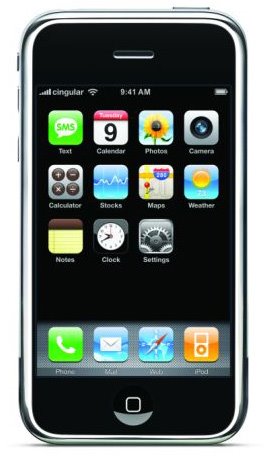
It seems like Apple has started approving some apps in the app store which claims to be iOS 4.3compatible suggesting iPhone, iPad and iPod touch users shouldn't wait long for the new update.Nextmag Mobile for iOS has been updated to be Compatible with iOS 4.3.
What's New in Version v4.0:
- The latest bug fixes and stability enhancements - In-app registration - The ability to synchronize searches and wishlists between Nextag Mobile and any desktop computer. - Sign in to your account via Nextag or Facebook right in the app - Compatible with iOS 4.3
iOS 4.3 beta 2 was seeded last week and we may see beta 3 this week. Apple will most likely release beta 4 next week followed by a GM seed before public release, so we may see iOS 4.3 final just after the arrival of iOS 4.2.5 with Verizon iPhone. What do you think?
Apple has just announced the new official Twitter account for the App Store. Apple will use the Twitter account to promote new and exclusive App offers. The account isn't verified till now.
Welcome to App Store on Twitter! Follow us to discover new apps, get exclusive offers, and share with friends. #appstore
Apple may promote discounts or distibute promo codes via giveaways on this new Twitter account, no one knows, but I think they will make good deals [via 9to5mac]
Wouldn’t it be nice to connect your smartphone to your car and continue to access the apps on your phone via voice as you drive? Quite frankly, the possibilities are endless if such a system exists to support this connection seamlessly. With the introduction of Ford’s SYNC AppLink technology, we seem to have moved one step closer to this reality.
What is SYNC AppLink?
Ford’s SYNC system is a factory-installed, fully integrated in-vehicle communications and entertainment system that allows users to make hands-free telephone calls and control music and other functions using voice commands. The system consists of applications and user interfaces developed by Ford and third-party developers that run on the Microsoft Windows Embedded Automotive operating system.
AppLink extends the current abilities of SYNC by allowing users to control third-party apps on their mobile device using SYNC’s voice recognition capability. With Ford’s SYNC AppLink installed in a car, a driver can control specific third-party applications on his smartphone by speaking to the automobile. AppLink doesn’t just offer simple, basic control of the smartphone apps. For example, users of Pandora – a web and mobile music streaming and discovery engine - can access their favorite personalized radio features, including creating and choosing stations, bookmarking songs for purchase, and giving songs a thumbs up/down all through voice.
AppLink will initially support three smartphone apps on Apple’s iOS, Google’s Android and Research in Motion’s BlackBerry platforms, with additional applications expected to be compatible with SYNC AppLink in the future.
Pandora
Android: Available now (V1.5.3 or higher)
BlackBerry: Available now (Version 1.1.6 or higher)
Apple iPhone: Coming early 2011
Stitcher
Android: Coming early 2011
BlackBerry: Late availability
Apple iPhone: Coming early 2011
OpenBeak
BlackBerry: Available now (Version 1.4 or higher)
SYNC AppLink Technology to be available for Ford Mustang and Fiesta
In Jan 2011, Ford announced that their SYNC AppLink technology will be available for their Ford Mustang 2012 models. This is in addition to a previous announcement back in Dec 2010 on the availability of the SYNC AppLink for the Ford Fiesta 2011 model.
In April last year, Ford also detailed plans for the release of the AppLink APIs. To developers, this means that they can leverage on the existing SYNC system to create applications that are suitable for use on an automobile. This also creates a differentiating factor for their apps. For example, drivers that can easily link Pandora to their vehicle and control it through the SYNC voice system might be more inclined to choose Pandora over Rhapsody or some other media streaming application.
In my opinion, this offers a unique niche opportunity: More than 2 million Ford vehicles have the current SYNC system and while only the 2011 Fiesta and the 2012 Mustang currently support AppLink, Ford is sure to be keen to add to the list of models that can work with smartphones in the future and increase the number of cars on the road that can support SYNC AppLink.
How does the Samsung Galaxy S matches up against the Nexus S, the successor of the Nexus One? If you are looking for a new smartphone, should you buy the new Android 2.3-powered Nexus S now or just go for the Samsung Galaxy S and wait for the Android 2.3 update?
In this review, we will provide our opinions on this showdown, as well as our perspective on the Nexus S in general.
Samsung has been a dominant force lately in the highly competitive smartphone domain.
Releasing the Samsung Galaxy S in Europe and Asia and different variations of the Samsung Galaxy S in the United States, Samsung is truly the clear winner in the fast-expanding Android market. The latest Comscore Nov 2010 report found Samsung to be the top handset manufacturer overall with 24.5% market share
With the decision to launch Nexus S with Samsung, Google has indirectly acknowledged the growing influence of Samsung and their Android products. However, the initial reviews of the Nexus S are not flattering, to say the least. A lot of people have been commenting that the Nexus S is basically a Samsung Galaxy S with contour screen, slightly different looks and running on Android 2.3, which is its main draw. Is that the truth?
Dimensions and Design
Galaxy S - 122 x 64 x 9.9mm (118g)
Nexus S – 123.9 x 63 x 10.9mm (129g)
Although Samsung manufactured and designed both the devices in question they aren’t actually as similar looking as you’d first expect them to be. The dimensions of both phones are similar but the Nexus S has obviously taken a step back from the iPhone-like design of the Galaxy S.
Instead, the Nexus S has taken on a decidedly softer profile with its rounded sides and curved body.
Normal users should not be able to distinguish the differences in their weight and as such, it boils down to personal preference on the winner of this section.
Storage
Galaxy S – 8 or 16GB, able to support up to 32GB microSD
Nexus S – 16GB, no microSD support
It definitely comes as a surprise to many people when it was discovered that the Nexus S will be released without microSD support. The Galaxy S, on the other hand, comes with either 8 or 16Gb and also has expandable storage, up to 32GB, which is a potential 48GB of storage in total.
Although it can be argued that a lot of apps on the Android Market currently cannot be saved to SD cards yet, it should not be a valid reason for the lack of microSD support. If Google has intended for all applications to be saved only to internal memory, there would not have been support for such functionality in Froyo. We found this inconsistency to be slightly frustrating and as such, the Galaxy S is definitely the winner here.
Displays and Processors
Galaxy S – Super AMOLED, 4 inch
Nexus S – Super AMOLED, 4 inch
On the display side, there is nothing to separate the two unless you take into consideration the contour screen of the Nexus S, which in our opinion, did not really affect the performance of the display much.
Galaxy S – 1GHz Cortex A8 (Hummingbird) processor
Nexus S – 1GHz Cortex A8 (Hummingbird) processor
On the processor side, there is no difference between the 2 models as well. In reality, the current 1Ghz processors are adequate for the foreseeable usage of these 2 smartphones and thus, this might explain why the Nexus S is only running the standard 1Ghz Hummingbird processor found in many high end Android phones. However, from CES 2011, we have seen what the Motorola Atrix 4G is capable of with its dual core processors. It would not be surprising thus to see many more future smartphones being released with dual core processors.
Camera
Galaxy S – 5 MP front facing camera
Nexus S – 5MP front facing camera with flash
If there is one thing that Samsung and Google has got it right, it must be the inclusion of a flash in the Nexus S for its camera. For far too long, iPhone users have been gushing about the flash that comes with the iPhone 4 and how it has been an improvement over the iPhone 3GS camera functionality. Now, at last, Samsung and Google can point to Nexus S as their answer to the weakness of the Galaxy S.
Operating System
Galaxy S – Android 2.3
Nexus S – Android 2.2 (soon to be updated to 2.3?)
The unique selling points of the Nexus S have always been that:
It’s the first Android 2.3 device
The Nexus S is guaranteed to have access to the next version of Android as soon as it is released
The Nexus S is also a fully open phone for developers, and thus, it is guaranteed that a lot of useful mods and ROMs will be developed for it, just like the case with the Nexus One. The Galaxy S, on the other hand, does not allow too much accessibility to its users. This makes it harder for those who like to tinker around or have full control over their phones. Well, you can always choose to root your Galaxy S but that’s another story altogether.
As such, besides the additional functionalities provided by Android 2.3, Nexus S should be a more appealing choice for the tinkers and developers out there. Coupled this with the fact that Samsung might not provide the upgrade to Android 2.3 for the Galaxy S as soon as we like it to be, the Nexus S is definitely the winner for this section.
Summary
From the results of the matchup, it becomes apparent that the intention of Nexus S is never to compete with or push the limits on the technical specifications and performance benchmark of current smartphones. The Nexus S is comparable to the Samsung Galaxy S for the normal everyday users but if it is taken in the context of a developer phone, then the advantages of the Nexus S becomes clear.
If you are an early adopter, an Android app developer or someone that desires full control of your phone, the Nexus S will be the logical choice. If you are comfortable with the default Samsung TouchWiz interface and has no intentions of even rooting your phone, then the Samsung Galaxy S will be a much better choice for you in terms of stability and support.
It seems whoever came to the conclusion that Android is shipping with a group of 30+ segments of code copied line by line from Java may have not done their homework. After further analysis of the files in question, Ed Burnette of ZDNet has concluded that there are in fact no instances of copied code shipping directly with Android.
The first set of files in question are a group used for running internal tests, and not meant to ship with a final build of Android on a device. A second set contain files specific to native code audio drivers, and also would not ship with Android. The first set did have some wonky licensing pasted on top of it, but Google has already taken upon itself to delete the files as of January 14th, 2011.
It seems the internet (we included) got a bit worked up over the sensationalist claims that Google is clearly stealing from Oracle and Java and was quick to spread the word without further checking into the code in question.
Not to be left completely in the dust by its successor the Nexus S, we are also receiving word that the Nexus One is also receiving an update today. The N1′s latest software brings it up to Android 2.2.2, which appears to be a maintenance update more than anything else.
We’re still looking into whether or not this update also fixes the SMS bug as does the Nexus S’s Android 2.3.2 update, but we get the feeling it does. Nexus One owners expect this one over the air over the next few days.
With the team behind Windows Phone 7 jailbreaking app ChevronWP7 meeting Microsoft earlier this week, many wondered what the future would hold for the homebrew scene. Now though, developers Rafael Rivera, Chris Walsh, and Long Zheng have broken cover to help allay everyone’s fears, writes GeekSmack.
While much of the discussions are understandably under NDA, the team have said that they will be working with the Redmond giant to ensure the Windows Phone 7 homebrew scenecontinues to develop.
After two full days of meetings with various members of the Windows Phone 7 team we couldn’t wait to share with everyone the results of those discussions. Although a large majority of the content presented by Microsoft is covered by a non-disclosure agreement (NDA), which we voluntarily agreed to, we can say we’re genuinely excited by many of the forward-looking presentations. We can only hope these features come to fruition as soon as possible. To address our goals of homebrew support on Windows Phone 7, we discussed why we think it’s important, the groups of people it affects, its direct and indirect benefits and how to manage any risks. With that in mind, we will work with Microsoft towards long-term solutions that support mutual goals of broadening access to the platform while protecting intellectual property and ensuring platform security. In the meantime, a forthcoming Windows Phone 7 update will fix a bug that the ChevronWP7 unlocker tool took advantage of; the tool will cease to work thereafter. To fill this short-term gap, we’re collaborating with Microsoft on an interim solution that will continue to support homebrew developments after the update. We will share details of this when it has been finalized. In summary, we appreciate Microsoft’s outreach, genuine interest and involvement in this matter and we hope the community can understand we’re working towards a win-win scenario.
It’s refreshing to see a hardware manufacturer be so open when it comes to the hacking of their device. If only Apple was so keen to listen to its users!